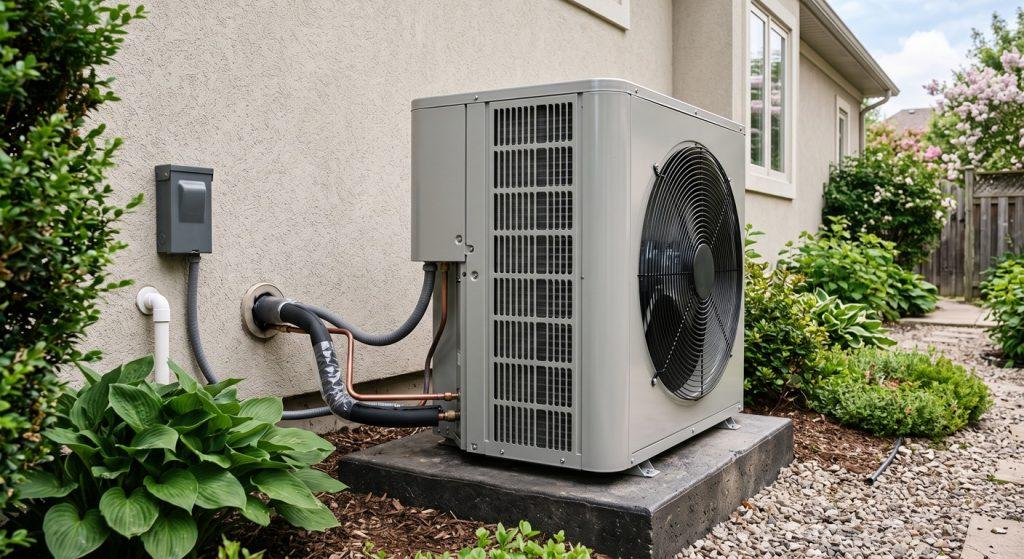
Heat pump cost is the number that stops most conversions before they start, and in 2026 it deserves a fresh look because the biggest subsidy just left the table. The federal tax credit that took $2,000 off qualifying installs expired on December 31, 2025, so the sticker price this year is much closer to the real price. Quotes still swing from under $4,000 for a single-room unit to $30,000 for ground-source systems, a spread wide enough to be useless without context. Here is what drives the number, what remains of the rebates, and how to compare bids that never look alike.
The heat pump cost ranges that matter in 2026
Air-source systems dominate the market and come in two shapes. A ducted unit that replaces a central furnace and air conditioner in one pass typically runs $12,000 to $18,000 installed, with straightforward swaps on healthy ductwork sometimes landing near $6,000 and complicated homes pushing past $25,000. Ductless mini-splits price by the zone: $3,500 to $8,000 covers one or two rooms, while a whole-home multi-zone layout reaches $12,000 to $19,000. Ground-source systems, the ones with buried loops, start around $15,000 and climb well past $30,000 once drilling gets involved, which is why they mostly appear on new builds and rural lots.
The equipment is often less than half of any of those figures. Labor, refrigerant lines, electrical work, permits, and disposal of the old system fill the rest, and those items vary far more by region than the hardware does. The same system can be quoted 30 to 40 percent apart in two different metro areas.
What moves the quote up or down
Ductwork decides more than brand. If the existing ducts are leaky, undersized, or missing, the contractor either fixes them or designs around them, and either path adds thousands. Electrical capacity is the second trap: older homes on 100-amp service sometimes need a panel upgrade before the new load fits, an item that rarely appears in the advertised price. Climate matters too. Cold-region homes should be quoted on cold climate models, which carry a premium; the ENERGY STAR cold climate designation requires third-party performance testing down to 5°F, so the label is worth checking rather than taking the installer’s word for it.
Sizing is a calculation, not a guess. A contractor who prices the job from square footage alone, skipping the load calculation, is estimating the most expensive part of the project by eyeball. There is also an experience premium: installers still learning the technology often price in their own uncertainty, a pattern the national lab researchers flagged when they studied why identical jobs come back with such different numbers.
The incentive picture changed in January
For a decade the federal government paid part of the bill. That ended. The 25C credit, worth 30 percent of a qualifying install up to $2,000, expired for systems placed in service after December 31, 2025, and the separate uncapped credit for ground-source systems went with it. A homeowner who installed in 2025 can still claim the credit on that year’s return. A 2026 install gets nothing from the IRS, so the heat pump cost on this year’s quote is the planning number.
What remains sits at the state and utility level. Utility rebates of a few hundred dollars per unit are common and usually easy to claim. Some states also run income-qualified rebate programs funded under the 2022 climate law, worth up to $8,000 toward a heat pump where the program is active, though several states have paused applications or hold waitlists. The practical move is to check the state energy office and the utility website before signing anything, and to get the installer to name every assumed rebate in writing, because contractors sometimes quote a net price against money the homeowner never manages to collect.
Heat pump cost against running cost
The purchase price is half the math. NREL’s national modeling found that for the 49 million homes heating with electricity, fuel oil, or propane that already have air conditioning, nearly all would cut their energy bills by switching, with median savings of $300 to $650 a year depending on equipment efficiency. Households on cheap natural gas are the exception. Gas costs much less than electricity per unit of heat in many regions, so a gas-to-heat-pump swap can be a wash or worse on the monthly bill even while it wins on emissions. Equipment grade matters more than buyers expect, since bottom-tier hardware can erase the savings in a cold climate.
The efficiency argument against older heating systems is largely settled; this site covered whether heat pumps are more efficient than traditional boilers back in 2024, and the equipment has only improved since. The open question in 2026 is whether the heat pump cost plus the local electricity rate beats what the household pays now, and that answer is local.
Getting quotes that can be compared
Three bids is the minimum, and they are only useful if they describe the same job. Marketplaces such as EnergySage, a comparison platform originally developed with Department of Energy funding, collect multiple installer bids from one request, which shortens the process; calling three local contractors works too, with more phone time. Whichever route, make every bidder answer the same list:
- A load calculation for the house, not a price per square foot.
- An itemized quote separating equipment, labor, electrical work, duct changes, and permits.
- Exact model numbers, so the cold climate listing can be checked independently.
- Who files the rebate paperwork, and what the price becomes if a rebate falls through.
- What backup heat, if any, the design assumes for the coldest week of the year.
A bid missing two or more of those is not cheaper. It is vaguer.
FAQ
How much does a heat pump cost to install?
Most whole-home air-source installs in 2026 land between $12,000 and $18,000 before rebates. Single-zone ductless units run $3,500 to $8,000, and ground-source systems start around $15,000. Ductwork, electrical condition, and region can move any of those numbers by thousands.
Is there still a federal tax credit for heat pumps in 2026?
No. The 25C credit expired for systems placed in service after December 31, 2025. Installs completed during 2025 can still be claimed on that year’s return, and state or utility rebates are the only remaining help for new projects.
Is a heat pump cheaper to run than a gas furnace?
Sometimes. Against electric resistance, oil, or propane heat, the savings are consistent and often large. Against low-priced natural gas the answer depends on local electricity rates, and plenty of gas households would pay slightly more each month after switching.
How long does a heat pump last?
Twelve to fifteen years is typical for air-source units, with well-maintained systems reaching twenty. Ground-source loops outlast the hardware attached to them by decades, which is part of what the higher install price buys.